
Dry Needling in Clinton Township, MI
Elite Physical Therapy and Performance offers dry needling as a specialized treatment technique that may be incorporated into a broader physical therapy plan when appropriate.
Treatment is based on the patient’s condition, movement limitations, symptoms, and rehabilitation goals rather than using dry needling as a stand-alone approach.
What Is Dry Needling?
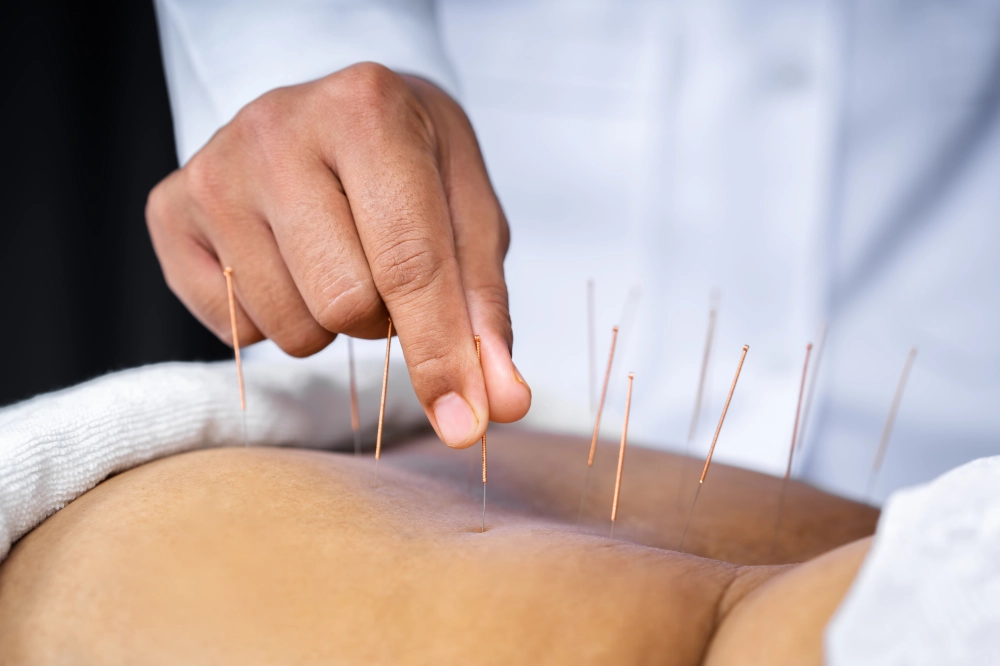
Dry needling is a treatment technique in which a trained physical therapist uses thin, sterile needles to target specific muscles or areas of soft tissue as part of a broader rehabilitation plan.
At Elite Physical Therapy and Performance, dry needling is performed using Seirin J-Sakura needles. These single-use needles are designed for precise placement and may be used when appropriate for patients experiencing muscle tightness, movement limitations, or other musculoskeletal symptoms.
Dry needling can be incorporated alongside therapeutic exercise, mobility work, strengthening, and other physical therapy treatments based on the patient’s needs. Some treatments may also include electrical stimulation when appropriate.
Your physical therapist can explain why dry needling is being considered, how it fits into your treatment plan, and what to expect during the session.
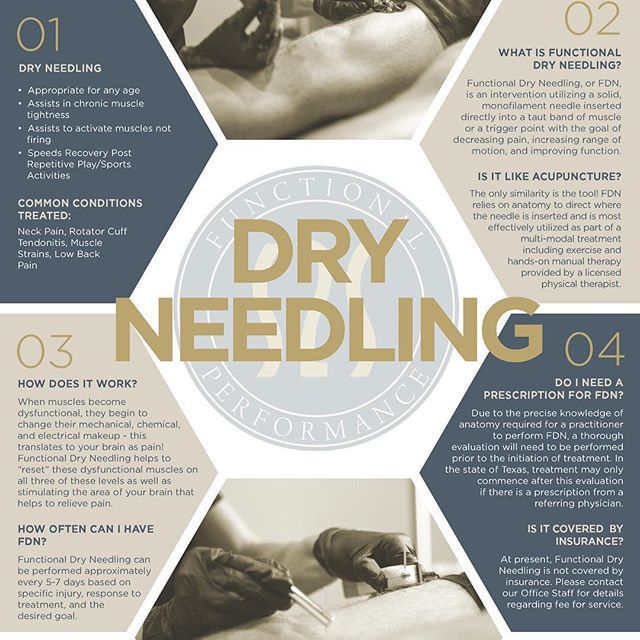
Image courtesy of pinterest.com via Google Images
When May Dry Needling Be Considered?
Dry needling may be considered when muscle tightness, tenderness, or restricted movement is contributing to a patient’s symptoms or limiting progress with rehabilitation.
A physical therapist may use the technique to address specific muscles or areas of soft tissue as part of a broader treatment plan. Whether dry needling is appropriate depends on the patient’s condition, examination findings, goals, and response to care.
Dry needling may be incorporated into treatment for concerns such as:
- Muscle tightness or localized tenderness
- Restricted or painful movement
- Neck, shoulder, or back-related muscle symptoms
- Hip or lower-extremity muscle tightness
- Sports- or activity-related muscle complaints
- Movement limitations during rehabilitation
Want a deeper explanation of how dry needling works and why it may be used in physical therapy?
Dry Needling With Electrical Stimulation
In some cases, electrical stimulation may be applied through the needles as part of the treatment. Your physical therapist can determine whether this approach is appropriate based on your symptoms, treatment goals, and overall rehabilitation plan.
Why Choose Elite Physical Therapy for Dry Needling?
- Specialized Training: Dry needling at Elite is performed by a physical therapist with training through the American Academy of Manipulative Therapy (AAMT).
- Seirin J-Sakura Needles: Elite uses thin, sterile, single-use Seirin J-Sakura needles for dry needling treatment.
- Electrical Stimulation When Appropriate: Electrical stimulation may be incorporated through the needles when appropriate as part of the treatment plan.
- Integrated Rehabilitation: Dry needling is used as one component of a broader physical therapy plan based on the patient’s symptoms, movement limitations, and rehabilitation goals.
What to Expect During Dry Needling
During dry needling, the physical therapist places thin needles into selected muscles or areas of soft tissue based on the examination and treatment plan.
Patients may feel very little during insertion, while others may notice pressure, an ache, a brief muscle twitch, or temporary soreness. Sensations can vary depending on the treatment area and individual response.
Dry needling may be followed by movement, mobility work, therapeutic exercise, or other physical therapy treatment depending on the goals of the session.
The dry needling portion of a visit may last approximately 15–30 minutes depending on the treatment area and plan.
Wondering if dry needling may be appropriate for you?
Contact Elite Physical Therapy and Performance to discuss your symptoms, goals, and treatment options.
Dry Needling FAQs
What’s the difference between dry needling and acupuncture?
Dry needling and acupuncture both use thin needles, but they are based on different clinical approaches. Dry needling is used by trained physical therapists as part of a rehabilitation plan and is generally based on musculoskeletal examination, anatomy, and movement-related findings. Acupuncture is rooted in traditional Chinese medicine and may use different evaluation and treatment principles.
Is dry needling painful?
Sensations vary from person to person. Some patients feel very little during needle insertion, while others may notice pressure, an ache, a brief muscle twitch, or temporary soreness in the treated area.
Is dry needling covered by insurance?
Coverage varies by insurance plan and may depend on how dry needling is billed as part of physical therapy. Contact Elite or your insurance provider if you have questions about your specific coverage.
How many dry needling sessions will I need?
There is no set number of sessions that applies to everyone. The frequency and duration depend on your symptoms, examination findings, response to treatment, and how dry needling fits into your broader rehabilitation plan.
Is electrical stimulation always used with dry needling?
No. Electrical stimulation may be added through the needles in some cases, but it is not required for every treatment. Your physical therapist can determine whether it is appropriate based on your condition and treatment goals.