
Blood Flow Restriction Training (BFRT) in Clinton Township, MI
Elite Physical Therapy and Performance may incorporate blood flow restriction training into a broader rehabilitation or strengthening program when appropriate.
BFRT uses controlled pressure during low-load exercise and may be used to support strength and muscle development when heavier resistance is not appropriate for the patient’s current stage of recovery.
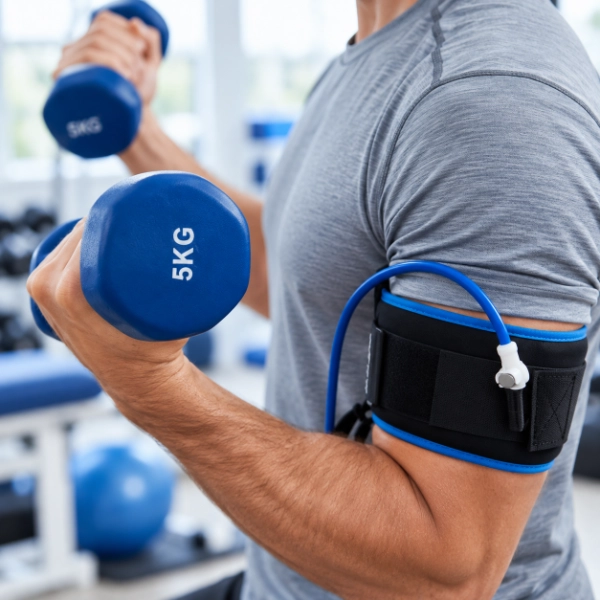
What Is Blood Flow Restriction Training?
Blood Flow Restriction Training (BFRT) uses a specialized cuff or band placed around a limb during low-load resistance exercise. The cuff applies controlled pressure while the patient performs exercises using lighter resistance than may otherwise be needed for strengthening.
In physical therapy, BFRT may be incorporated when building or maintaining strength is a goal but heavier resistance is not appropriate for the patient’s current stage of rehabilitation.

Why Use BFRT in Physical Therapy?
- Strength Training With Lighter Loads: BFRT may allow patients to perform strengthening exercises with lower resistance when heavier loads are not appropriate.
- Support During Rehabilitation: BFRT may be incorporated into rehabilitation after injury or surgery when the physical therapist determines it is appropriate for the patient’s stage of recovery.
- Muscle Strength and Development: The technique may be used as part of a program focused on rebuilding strength and muscle capacity.
- Individualized Progression: Cuff pressure, exercise selection, resistance, and progression can be adjusted based on the patient’s condition, tolerance, and rehabilitation goals.

Who May Benefit From BFRT?
Blood Flow Restriction Training may be considered for patients who need to rebuild or maintain strength while heavier resistance is not appropriate for their current stage of rehabilitation.
BFRT may be incorporated into rehabilitation for patients recovering from:
- ACL reconstruction
- Rotator cuff repair
- Knee or hip replacement
- Fractures or periods of immobilization
- General muscle weakness or loss of strength
BFRT may also be used with athletes and active adults when lower-load strengthening is appropriate for their training or rehabilitation goals. Whether BFRT is appropriate depends on the individual patient, condition, and treatment plan.
What to Expect During a BFRT Session
When BFRT is included in your treatment plan, your physical therapist will select the cuff placement, pressure, exercise, and resistance based on your individual needs and response.
A specialized cuff is placed around the appropriate arm or leg and adjusted for the treatment session.
Your physical therapist guides you through low-load strengthening exercises selected for your rehabilitation goals.
Your therapist monitors your response, exercise tolerance, fatigue, and movement throughout the session.
BFRT is incorporated as part of an individualized physical therapy plan when the treating therapist determines it is appropriate.
The Technology Behind BFRT at Elite
Elite Physical Therapy and Performance uses specialized blood flow restriction systems that allow the physical therapist to adjust cuff pressure and exercise progression based on the patient’s treatment plan.

AirBands Wireless BFR Cuffs
What They Are
AirBands are wireless blood flow restriction cuffs that use Bluetooth-connected controls to help manage cuff pressure during exercise. Their compact design allows patients to move through strengthening activities without being connected to a larger machine.
Features
- Wireless cuff design for greater freedom of movement
- Digital pressure controls used during supervised exercise
- Adjustable settings based on the treatment plan
- Compact system that can be incorporated into different exercises
Why Elite Uses AirBands
AirBands give the physical therapist a practical way to combine controlled blood flow restriction with low-load strengthening during rehabilitation. Cuff settings and exercises can be adjusted according to the patient’s condition, tolerance, and goals.
Suji BFR
What It Is
Suji BFR is an app-connected blood flow restriction system that pairs digital cuffs with pressure controls and guided exercise features. The system can be used as part of a structured rehabilitation or strengthening program when BFRT is appropriate.
Features
- App-connected cuff controls
- Adjustable pressure settings
- Exercise guidance and tracking features
- Portable design for use within different rehabilitation activities
Why Elite Uses Suji
Suji gives the physical therapist another option for monitoring and adjusting BFRT during rehabilitation. The technology can support a more structured approach to cuff pressure, exercise selection, and progression while treatment remains guided by the therapist.